How Long Does Physical Therapy Take to Work for Common Injuries?
How Long Does Physical Therapy Take to Work for Common Injuries?
When an injury sidelines you, the first question is almost always the same: how long until I feel like myself again? Whether you are dealing with a nagging knee from your morning run, a shoulder that flares up mid-serve, or back pain that has overstayed its welcome, understanding the recovery process helps you move through it with more confidence and less frustration.
There is no single answer that applies to every person or every injury. What performance physical therapy does offer, however, is a structured, evidence-informed path from pain to full function, and ideally, to a stronger baseline than where you started.
What Shapes Your Recovery Timeline
Several factors influence how quickly you will notice meaningful progress. Understanding them helps set realistic expectations from the start.
Injury Severity and Duration
An acute ankle sprain addressed early will typically respond faster than a chronic case of Achilles tendinopathy or sciatica that has been building for months. Acute injuries, when treated promptly with targeted orthopedic physical therapy, often show early improvement within the first few sessions as pain decreases and mobility begins to return.
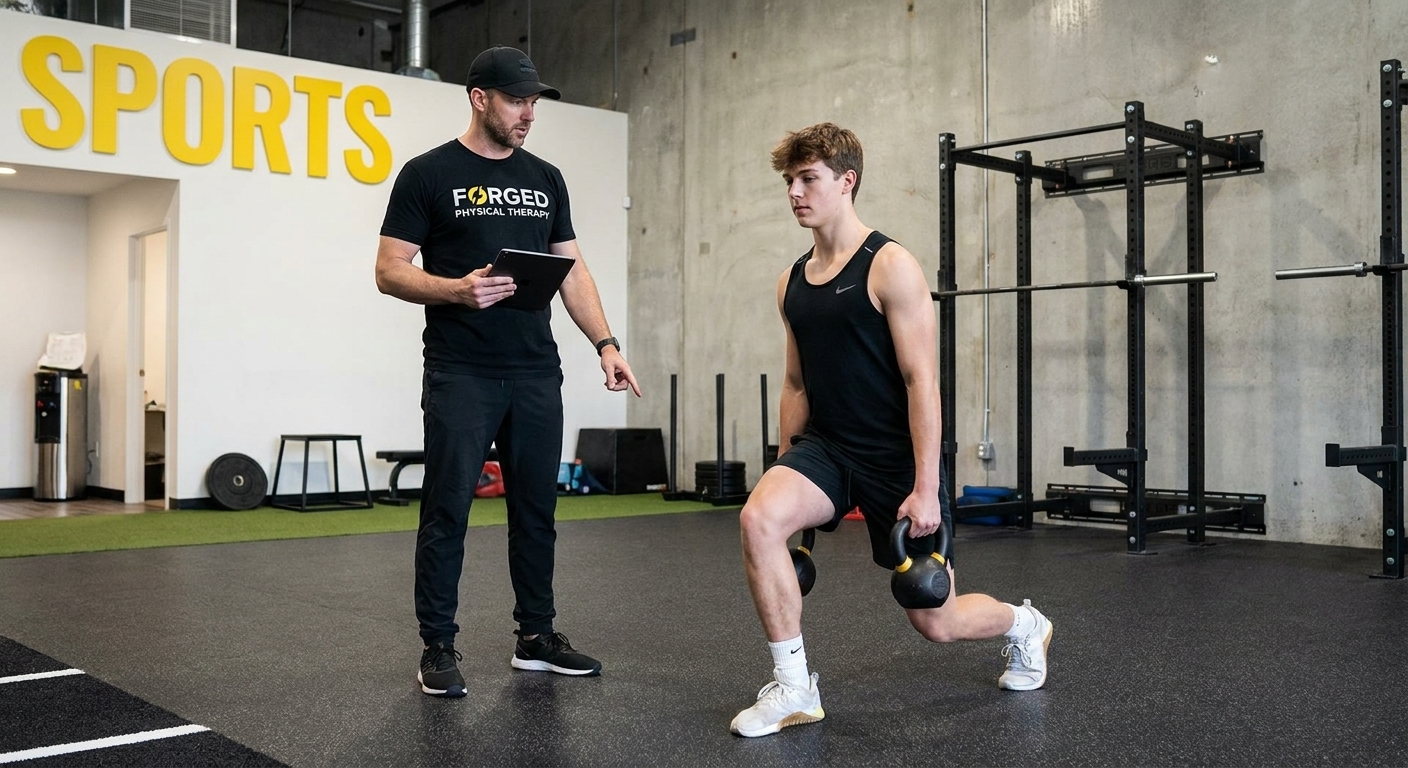
Chronic conditions involve layers of compensation, tissue adaptation, and movement dysfunction that take more time to unravel. A thorough initial assessment, which at Forged Physical Therapy may include tools like Force Plate Testing, VALD Testing, or a Functional Movement Assessment, helps establish exactly where you are starting from so your plan is built on accurate information rather than assumptions.
Your Active Participation
Sports physical therapy and performance physical therapy are not passive experiences. The work done inside the clinic matters, but so does the consistency you bring to your prescribed home exercises and movement habits between sessions. Patients who engage fully with their program, both in-session and outside of it, tend to progress more efficiently and maintain their results longer.
The Complexity of Your Movement Patterns
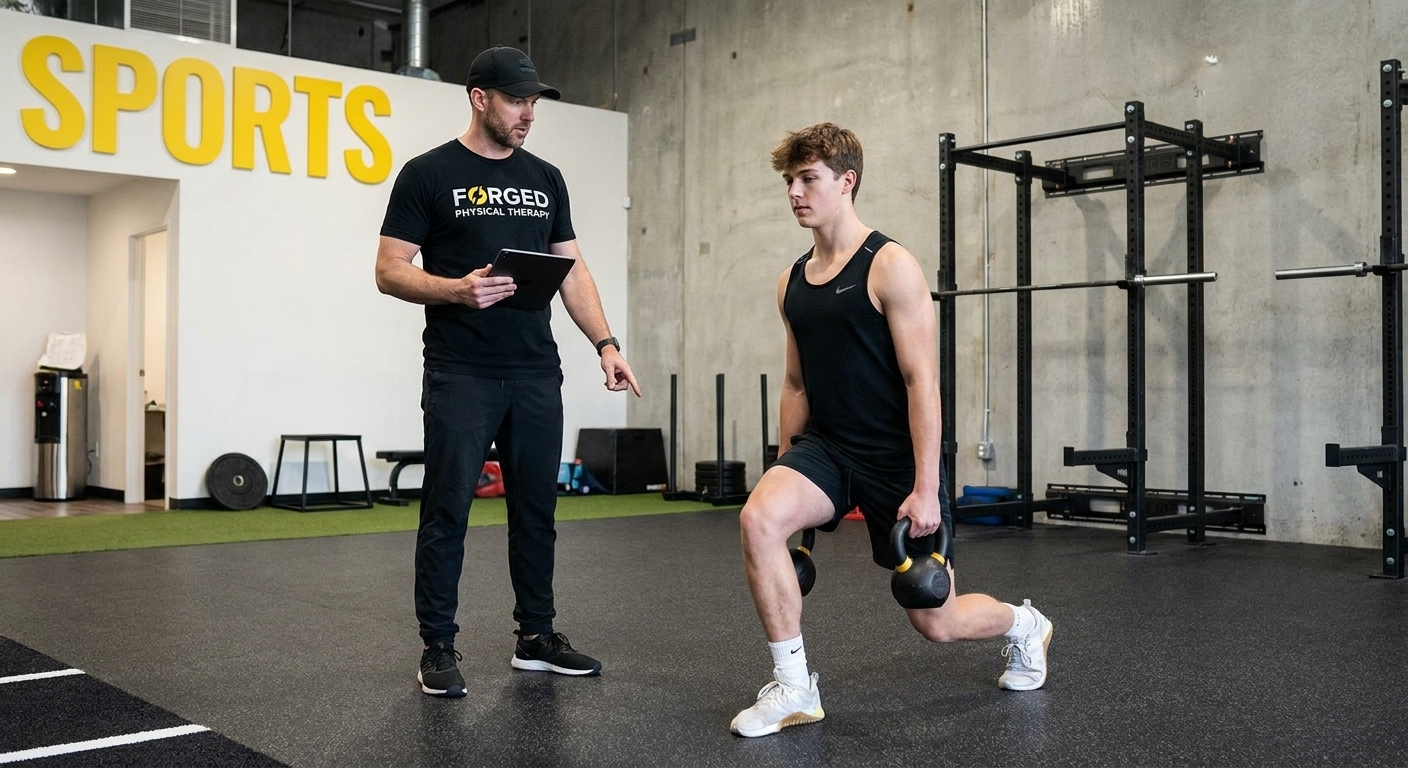
Injuries rarely exist in isolation. A runner's knee may be connected to hip weakness and poor foot mechanics. Shoulder impingement may trace back to thoracic stiffness and rotator cuff imbalances. Identifying and addressing these upstream contributors is what separates a lasting recovery from a temporary fix. This is why a movement screen or running gait analysis can be a valuable part of the process for active individuals.
What the Recovery Process Generally Looks Like
While every case is different, physical therapy for common injuries tends to follow a recognizable progression.
Early Phase: Reducing Pain and Restoring Mobility
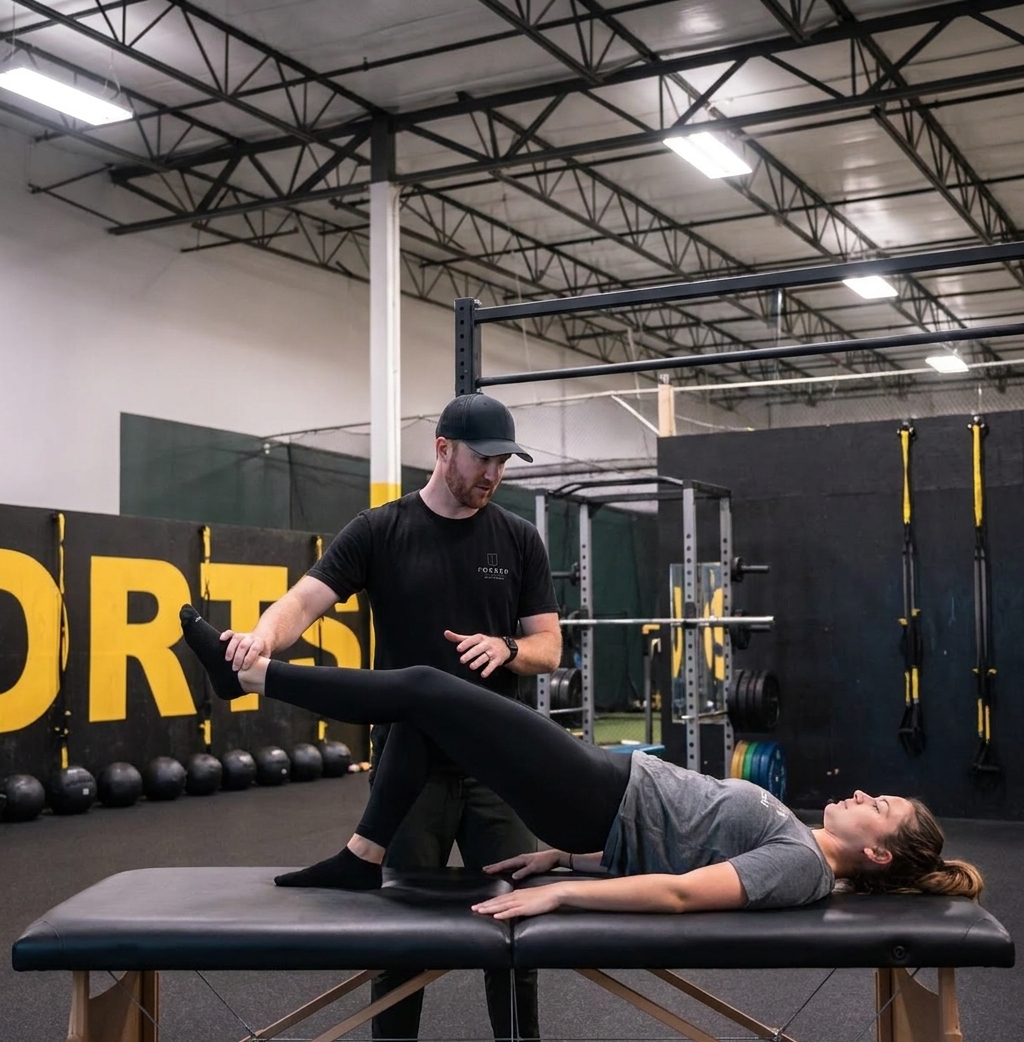
In the first few sessions, the focus is on calming irritated tissue, reducing pain, and restoring basic range of motion. Hands-on techniques such as manual therapy, joint mobilization, myofascial release, and soft tissue mobilization are commonly used during this phase. Many patients notice meaningful pain relief within two to four weeks of consistent care.
Middle Phase: Rebuilding Strength and Stability
Once pain is better managed and mobility is improving, the emphasis shifts to rebuilding the strength and neuromuscular control that supports the injured area. This is where therapeutic exercise, neuromuscular re-education, and tools like Blood Flow Restriction (BFR) training become central to the plan. BFR is particularly useful for building muscle strength without placing excessive load on healing tissue, making it a valuable option for conditions like ACL injuries, meniscus injuries, and post-surgery rehabilitation.
Later Phase: Performance and Return to Activity
The final phase bridges rehabilitation and performance. For athletes and active individuals, this means preparing the body for the specific demands of their sport or activity. Plyometrics, return-to-sport progressions, and strength and conditioning work are integrated here. Return-to-Sport Testing provides objective data to confirm readiness rather than relying on how someone feels on a given day.
For runners, a running gait analysis during this phase can identify mechanical inefficiencies that may have contributed to the original injury. For golfers, a Titleist Performance Institute (TPI) assessment can connect physical limitations to swing mechanics.
Common Injuries and General Timelines
The following are general ranges. Individual results will vary based on the factors discussed above.
Ankle sprain: Four to eight weeks for mild to moderate sprains with consistent care
Plantar fasciitis: Six to twelve weeks, depending on chronicity and load management
Runner's knee / patellofemoral pain: Six to ten weeks with targeted hip and quad strengthening
IT Band syndrome: Six to ten weeks, often requiring gait and training load adjustments
Low back pain: Four to eight weeks for acute episodes; longer for chronic presentations
Rotator cuff pain or impingement: Eight to twelve weeks depending on severity
Hamstring strain: Four to twelve weeks depending on grade
ACL injury (post-surgery): Nine to twelve months for full return-to-sport clearance
These timelines assume active participation in a structured program. Delays in starting care, gaps in attendance, or returning to full activity too soon can extend recovery significantly.
Why Individualized Care Accelerates Results
At Forged Physical Therapy in Montclair, CA, sessions are conducted one-on-one with a Doctor of Physical Therapy. This means your provider is with you for the full session, observing your movement, adjusting your program in real time, and ensuring every exercise is performed with the precision needed to drive progress.
This level of attention is not a luxury. It is what allows your plan to evolve as you do, catching compensations early, progressing load appropriately, and keeping your recovery on track. Generic programs applied broadly rarely produce the same outcomes as a plan built around your specific injury, your movement patterns, and your goals.
Moving Forward
Recovery takes time, but it does not have to feel uncertain. Understanding what drives your timeline, committing to the process, and working with providers who treat you as an individual rather than a diagnosis are the factors most within your control.
If you are ready to get a clear picture of where you stand and what it will take to get back to full strength, contact Forged Physical Therapy in Montclair, CA to schedule your initial evaluation.
